Table Of Content
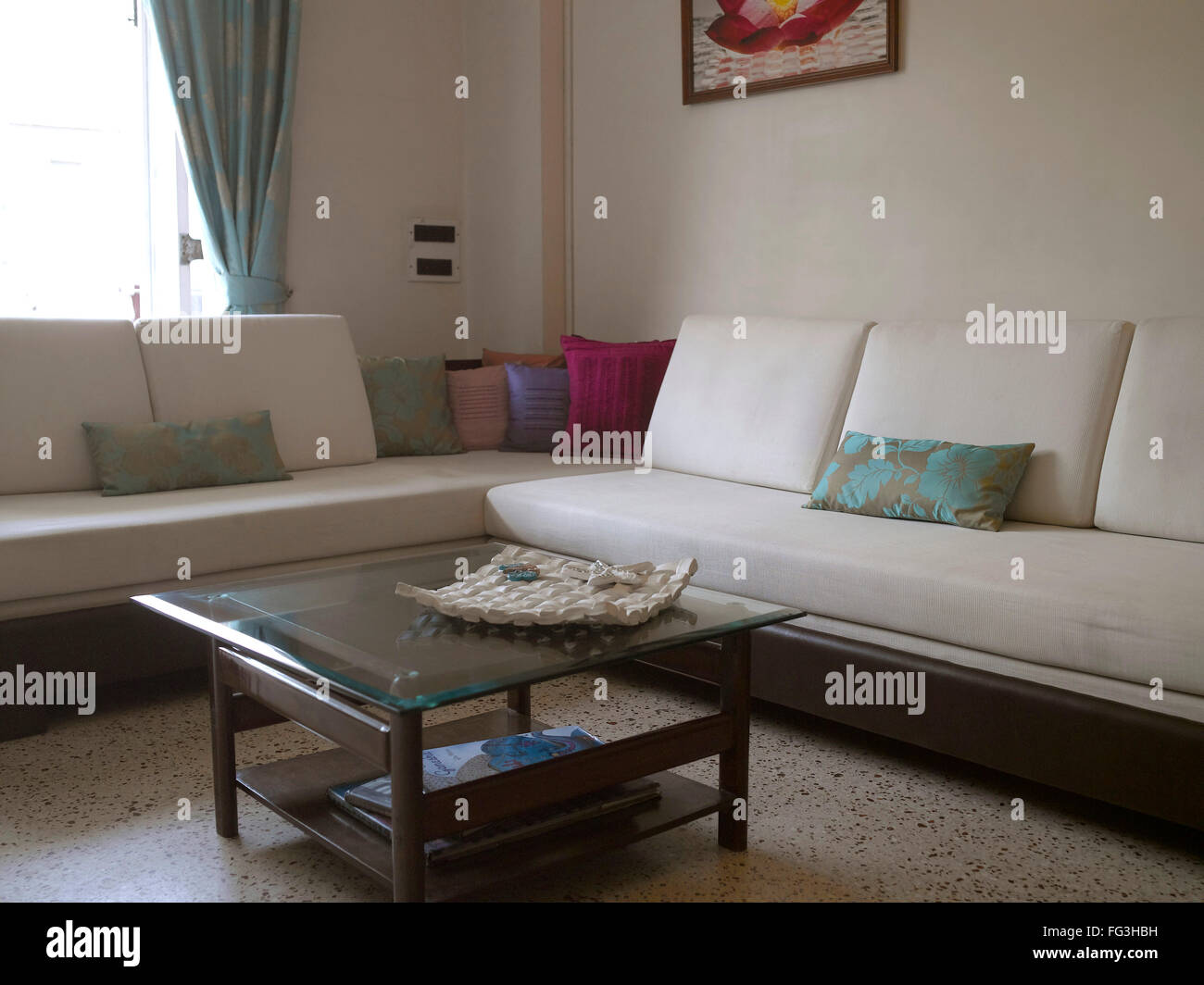
Also included are an arch design oakwood console and a colonial cane chair from Magnolia; a vintage foliage print cabinet from House of Things; and vintage glass lights by Hesperus. In 1964, Correa, along with Shirish Patel and Pravina Mehta, created a proposal for the restructuring of the city of Mumbai, which was eventually accepted by the government, and the city of New Bombay, or Navi Mumbai, was born. Although much of Correa’s work is focused outside Bombay, many of the buildings of Bombay share a lot of strategies with his designs.
Contemporary architecture and development
The urban development of Bombay as a port city resulted from its distinct location, which proved to be of importance to the western Indian Colony. But the city was only well maintained in parts and ended up being extremely squalid and congested in others. The end of the 19th century, starting from 1880, saw a massive wave of immigrants coming to Bombay. This influx of people from different backgrounds considerably altered not only the physical form but the social and cultural character of the city as well.
Building Connections: The Integral Role of Architecture in Human Existence and Community
The views from this fifth-floor apartment are a luxury in their own league, leaping across time and architectural styles. Built in the 1920s, Sunshine represents the art deco wave of Bombay, when progressive merchants and entrepreneurs of the time began exploring the flamboyant architectural style and brought it back to their home city. When she began working on Sunshine, the revived interest in art deco in Bombay was visibly picking up. It had to be done incrementally and certainly not like an invasion.” Yet this wasn't a pure restoration project. It was someone's home, a husband and wife's, and it had to be functional and practical and beautiful and simply a home.
Modern Homes for Sale in Los Angeles
Efforts to raise awareness about their cultural and historical significance are crucial to ensuring their preservation for future generations. As Bombay continues to evolve and grow, the preservation of its architectural heritage becomes increasingly important. Modernist Houses stand as a reminder of the city’s rich cultural legacy, offering a glimpse into a bygone era while remaining relevant in the present day. By celebrating and preserving these architectural treasures, we honor the visionaries who shaped the urban landscape and continue to inspire future generations of architects and designers. Dr. Mustansir Dalvi is Professor of Architecture at Sir JJ College of Architecture, Mumbai. He has lectured, read and published several papers and books on architectural history and heritage.

Mumbai Mint
The railway station was built to replace the Bori Bunder railway station, in the Bori Bunder area of Mumbai, a prominent port and warehouse area known for its imports and exports. Since Mumbai became a major port city at the time, a bigger station was built to meet its demands, and was named Victoria Terminus, after the then reigning Empress of India, Queen Victoria. The station was designed by the consulting British architect Frederick William Stevens. Stevens earned the commission to construct the station after a masterpiece watercolour sketch by draughtsman Axel Haig. The final design bears some resemblance to St Pancras railway station in London. GG Scott's plans for Berlin's parliament building had been published four years before, and also has marked similarities to the station's design.

Modernist houses, with their emphasis on efficiency and thoughtful design, can contribute to sustainable urban development by minimizing energy consumption and promoting a healthy living environment. Modernist architecture emphasizes simplicity, functionality, and a departure from traditional ornamentation, reflecting the spirit of the 20th century. Designed by Col. J.A. Fuller, a British engineer, the Court is a masterpiece of Gothic architectural style that was apparently modeled on a German castle. On top of the building, statues of Justice and Mercy inspire upholding the Indian law. Mumbai's landmark Taj Palace Hotel, built in 1903, is an unsurpassed architectural marvel that brings together Moorish, Oriental and Florentine styles. Its structure is striking, with many chandeliers, archways, domes, and turrets.
The imperial exercises in power-building reached their apogee in the last two decades of the nineteenth century, paralleling the city’s rise as a mercantile power in the wake of the American Civil War ( ), and the opening of the Suez Canal in 1869. Imperial architecture would continue into the first decade of the twentieth century. The grand public buildings of the city included the railway stations, administrative buildings, town halls, universities, museums and hospitals- showpieces to the imperial order on an urban scale. Once these were done however, there would not be much addition to the city in the form of government buildings. What came next were exercises in urban planning and consolidation, insertions and extensions to the existing city to accommodate the changing demographics of an upwardly mobile citizenry. After architect Rudolph Schindler came to California in the 1920s to oversee construction of Frank Lloyd Wright's Hollyhock House, he designed his residence in West Hollywood.
Influential Architects:
Weekly updates on the latest design and architecture vacancies advertised on Dezeen Jobs. Daily updates on the latest design and architecture vacancies advertised on Dezeen Jobs. "The land has become more valuable than the house, and even if people understand the value of such a home, location and land value often trump architectural significance." "Older mid-century homes are smaller and underbuilt for their plots of land."
4 Mumbai homes that embrace old-world charm - Architectural Digest India
4 Mumbai homes that embrace old-world charm.
Posted: Sun, 23 Jan 2022 08:00:00 GMT [source]
Restored and updated throughout its life, the four-bed house covers 3,600 sq ft, surrounded by gated gardens and a pool. The annual Salone del Mobile furniture fair has always been big — it’s the event of the year for the international design world, drawing hundreds of thousands of makers, curators, editors and buyers to Milan each April for a week’s worth of inspiration, shop talk and aperitivi. Luckily, there were so many interesting presentations on view that braving the crowds felt well worth it. As the wealthiest city in India,[20] Mumbai attracts an enormous amount of international investment and has seen a large number of modern high-rise office buildings and flats spring up in recent decades. In many parts of the city, particularly the newer suburbs, modern buildings dominate the landscape away from the old part of the city. Mumbai has by far the largest number of skyscrapers in India, with 956 existing buildings and 272 under construction and many more planned as of August 2009.[21] The tallest skyscrapers in Mumbai include the Palais Royale, The Imperial, and One Avighna Park.
In Bandra, the highrises with their stern faces made of steel and glass, sit comfortably next to yellowing villas which are a constant reminder that this was once a fishing village. An apartment designed by Shiraz Jamali Architects, mixes the two universes with a compelling design story. Its light-suffused interiors radiate a “warm, welcoming and homely” aura, precisely what the clients had stated in their brief to the team, which included the firm’s founder Shiraz Jamali and architect Mammen Paul. While these Modernist houses contribute significantly to Bombay’s architectural heritage, many face challenges related to preservation. Rapid urban development, changing land-use patterns, and the need for modern amenities often place these structures at risk.
Amidst the towering skyscrapers and colonial relics, modernist houses emerge as beacons of contemporary design. These architectural marvels seamlessly blend form and function, offering residents a harmonious living experience amidst the city’s bustling streets. The large-scale appropriation of modernist architectural features in everyday housing projects in postcolonial India is remarkable. This article examines how regional architects adapted their engagement with architectural modernism to the evolving circumstances of architectural production within the context of the developing world. Drawing on Pierre Bourdieu’s “field theory”, it presents a detailed case study of two decades of residential work by Architects United, a medium-scale architectural practice founded in the Indian city of Pune in 1961.
In fact, you might recognize a few styles of visual art like cubism, dada, abstract, and pointillism. The Schindler House in West Hollywood is one of the most experimental architectural landmarks in Los Angeles. Designed and built in 1922 by architect Rudolf M. Schindler, the home was one of the earliest attempts at communal living. Schindler and his wife Pauline shared the home with another couple, Clyde and Marian Chace. The home included a shared kitchen, but had separate rooms for each individual. The unconventionality was inspired by the Schindlers’ 1921 trip to Yosemite’s Curry Village, where they experienced a lifestyle in tune with nature.
The Modernist houses of Bombay stand as testaments to a transformative era in architecture, where visionary architects reimagined the cityscape with a blend of global Modernist principles and local sensibilities. As the city continues to evolve, preserving these architectural gems becomes essential for maintaining a tangible link to Bombay’s cultural and design history. The legacy of Modernist houses in Bombay is not only an architectural triumph but also a celebration of the city’s ability to embrace elegance, innovation, and the spirit of progress. In the wake of the crudity of the Industrial Revolution, Batley regretted that architects in England fell back upon the revivals out of sentimentality and this choice was superficial and transitory. Despite this, Batley has been described as a ‘neo-traditionalist’ by writers commenting on his practice and his writing, such as Lang, Desai, & Desai (1997, p. 141).
M. A. Ridley Abbott was part of 'Prynne, Abbott and Davis’, a prominent architectural firm in Madras and southern India at that time, along with name partners John E. Davis and Major Harold F. Prynne. Appointed as the architect for Liberty Cinema, Marine Lines, John B. Fernandes took over its completion after Abbott's untimely death. These people actively contributed to the skyline of Bombay and making buildings that were more ‘Indian’ in nature as compared to the Colonial Victorian Gothic, Neo- Classical, Renaissance, etc. that were more ‘English’ in nature. From the living area, the house then dissects into two sections, the left wing and the right wing. On the left, a passageway leads to the kitchen, the children’s bedroom, and the master bedroom. No major structural changes were made to the apartment except the conversion of the fourth bedroom into a den, the Gandhi family’s favourite part of the home.
The design of apartment layouts here arranged around rigid double loaded corridors, with servant areas and side entries distinct and separate (Dalvi, 2000, p. 16). Architecture constructed in RCC would soon become the standard, whether for bungalows, apartment blocks, office buildings and even palaces. It is through these publications that we can see the long reach of this technology and the popularity of the architecture that it engendered.
The historic boardroom on the fourth floor has been restored to its original beauty with only technology being a new addition. The overhaul of the Bombay House office was led by architect and urban conservationist Brinda Somaya, of Somaya and Kalappa Consultants. In March 2014, it became the first heritage structure in the country to get a gold rating as a green, environmentally friendly building, awarded by the Indian Green Building Council (IGBC), the Indian chapter of the US Green Building Council. We also rounded up a selection of recently released watches designed by Pritzker Architecture Prize-winning architects. We continued our coverage of Milan design week, rounding up architect-designed furniture from the year's biggest design event, including pieces by Zaha Hadid Design, Heatherwick Studio and Foster + Partners.


No comments:
Post a Comment