Table Of Content

From the street, the box-shaped house sits discreetly at the end of a short driveway. To the right of the two-car garage, a stone pathway meanders through a landscaped courtyard and past a large rock sculpture to the architectural, double-height, glass-enclosed entrance offering immediate ocean views across the length of the home. Volkov and Phipps plan to keep the mid-century modern look and feel for the exterior with modern appliances and features throughout the house inside. They are still in the process of getting the permits they need to start construction.
ARCHITECTURAL FIRMS
AD Small Spaces: A couple's 464-square-foot 1BHK Mumbai home is comfortably minimal - Architectural Digest India
AD Small Spaces: A couple's 464-square-foot 1BHK Mumbai home is comfortably minimal.
Posted: Sat, 12 Aug 2023 07:00:00 GMT [source]
Since the apartment is on the seventh floor, the trees outside have been utilised to give the feeling of an extended garden, with window sit-outs provided throughout the apartment for indoor-outdoor integration. “Window sit-outs offer a great sense of interaction into the living and bedroom spaces with natural light and air filtering in,” he says. In the face of changing urban dynamics, many modernist houses in Bombay have undergone adaptive reuse and revitalization. Architects and designers are reimagining these structures to meet contemporary needs while preserving their architectural integrity.
4 Mumbai homes with the most calming, atmospheric interiors - Architectural Digest India
4 Mumbai homes with the most calming, atmospheric interiors.
Posted: Fri, 14 May 2021 07:00:00 GMT [source]
Mumbai Mint
A turbaned man, probably a barber, sits with two others on the stairs of a house. Banganga Tank is an ancient water tank that's one of the oldest surviving structures in Mumbai. It dates back to 1127 AD, to the time of the Hindu Silhara dynasty, when it was built over a freshwater spring by one of the minister in the dynasty's court. Those unfamiliar with Mumbai's history may wonder why the Fort district is referred to as such. Fort St. George was built by the British East India Company around Bombay Castle (one of the oldest defensive structures in Mumbai). Named after King George III, it was 1.6 kilometers (one mile) long and 500 meters wide.
Post-Independence Architecture of Mumbai
Where the neoclassical has an orderly monochromatic presence, the Gothic style is expressive, disjointed with surfaces of lives colors, beautified with carved and narrative elements, consisting of flying buttresses, lancet windows and stained glass. At first, due to the immense freed space it obtained, Gothic building only served as churches, as religious buildings built by people of the 11th century. However, soon enough there came a need for public halls, parliament houses, mansions, and the Gothic era was the solution. Indian architects came to analyze this style and represent it and put it into play in relation with the climate, and in relation to society's plans and sensibilities.
Embracing Timeless Elegance: Exploring the Modernist Houses of Bombay
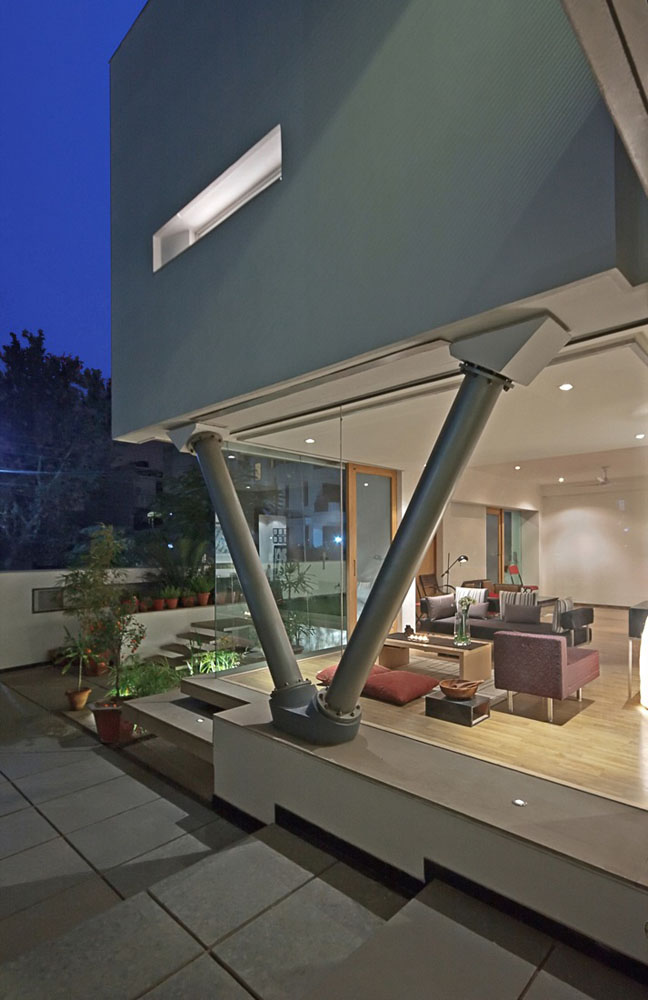
The terrace, furnished with different seating arrangements, features a pergola and an outdoor bar, with varied plants dotting the space. Breezy and spacious, it opens up to uninterrupted views and serves as an ideal spot to unwind with family and friends. Architects and interested laypersons alike vigorously debated, argued, critiqued and defended the changing architecture of the changing city.
He arrived with a bang on the Indian art scene after joining Progressive Artists Group. His artistic output was immense and varied and included paintings, prints and films. The oldest museum in Mumbai, the Dr Bhau Daji Lad Mumbai City Museum (formerly the Victoria and Albert Museum) is an extraordinary example of Palladian design (derived from Andreas Palladio, an Italian architect of the 16th century). Originally established in 1855 as a treasure house of the decorative and industrial arts, it was rebuilt in 1862 in the Renaissance Revival style of Palladian. The Museum was painstakingly and comprehensively restored between 2003 and 2007. It was built in the 1920s, along with the Town Hall, and has similar architecture with pillars and Grecian porticoes.
The allure of modernist houses in Bombay lies not only in their architectural splendor but also in the stories they tell and the legacies they embody. As testaments to human creativity and ingenuity, these structures continue to inspire awe and admiration. Offering a glimpse into the ever-evolving landscape of urban living in one of India’s most dynamic cities. Beyond its architectural significance, modernist houses in Bombay hold cultural and historical relevance. As symbols of progress and modernity, these structures reflect the aspirations of a burgeoning middle class and the shifting socio-economic landscape of post-independence India.
With its sleek lines, minimalist design, and seamless integration of indoor and outdoor spaces, this architectural marvel stands as a testament to the enduring allure of modernist design principles. In this paper we address the role of architectural criticism in the conception and practice of modernism in India – since post-independence till the present. India has witnessed a vast difference in the culture of the built environment.
However, the building was actually conceived to commemorate the visit of the Duke of Edinburgh in 1870. 1891Architectural firm established in partnership between Dhunjishaw Pestonjee Bhedwar and Jamshedji Pestonji Mistri. Architectural practice established by the merger of the individual practice of David W. Ditchburn with the well-reputed firm of Mistri & Bhedwar, in 1944. Minocher J.P. Mistri and Perin Mistri, children of Jamshedji P. Mistri (of Mistri & Bhedwar) were also partners in this firm.
Many consider Neutra one of the most important twentieth-century architects and this house tour gives a chance to see his home. This unusual house was designed for him by Arthur L. Haley in the Arts and Crafts style; it retains its original interiors and furnishings. Schindler came to California to work for Frank Lloyd Wright and supervise construction of the Hollyhock House. For a fascinating tour through his personal development as an architect, start there, then see his private home listed above, then tour Fitzpatrick-Leland to see the radical changes in his style over just a few-years period.
“With abundant bright natural light flooding the house, I chose pastels – light green flooring, a lighter green tiled wall for the dining area and a lot of shades of blue to add to the cohesiveness,” says Bahl. The ceiling of the foyer to the passage walls, half panelled walls, wooden moulding details and the use of colours make the space look busy, in order to balance out the large empty swathes of high ceilings and massive windows. An open plan living room, a rounded long fixed window and a round pillar in the middle – these elements weren’t challenging for Bahl, but exciting.


No comments:
Post a Comment